How Much Protein Do You Actually Need as You Age?
The RDA was set for survival, not for thriving. Newer evidence — and a generation of stronger older adults — argues for higher targets.
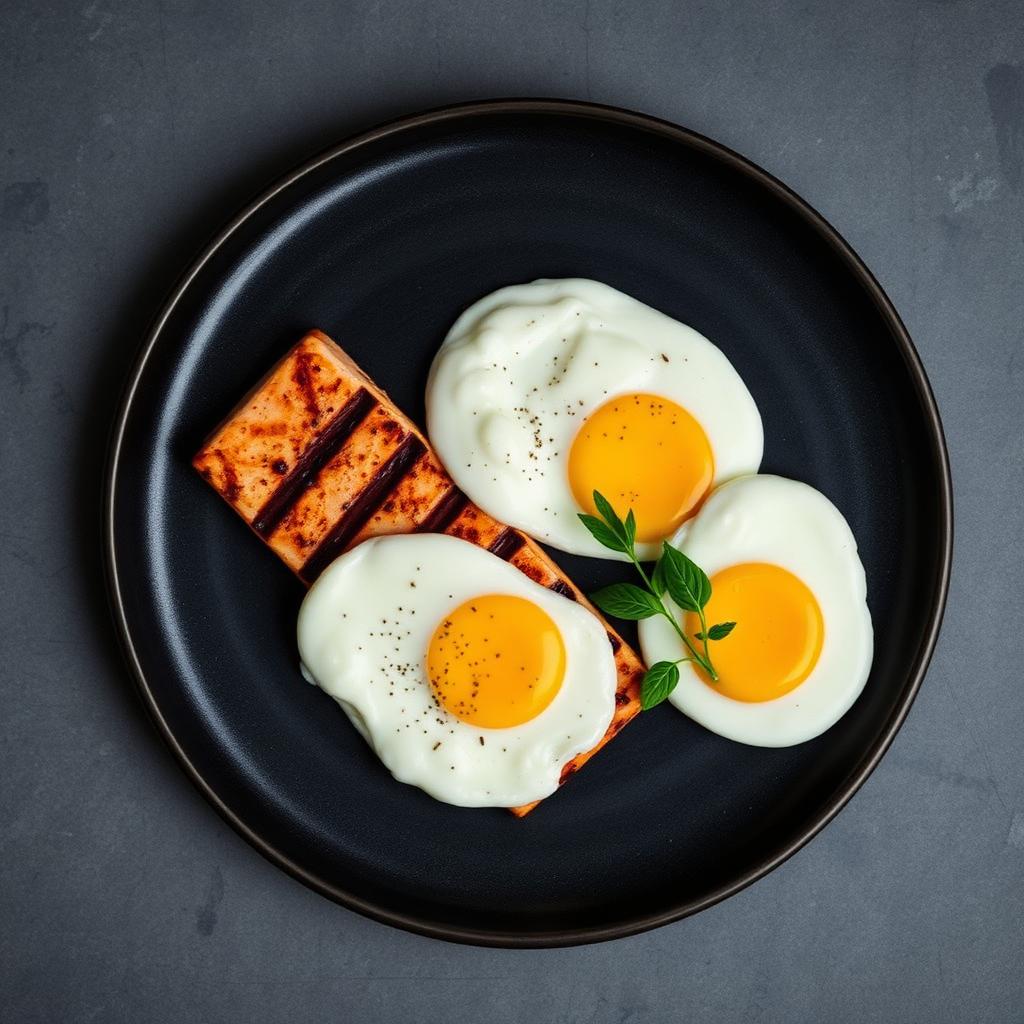
Overhead view of grilled salmon and eggs on a dark ceramic plate.
The protein RDA — 0.8 g/kg per day — has not moved in decades. The research has. So has the typical body composition of healthy older adults.
What the RDA represents
The minimum intake to prevent measurable deficiency in 97.5% of healthy adults. It was never designed to support optimal muscle retention, recovery from illness, or function in late life.
What current evidence supports
Adults over 50 retain lean mass and function better at intakes of 1.2–1.6 g/kg per day, distributed across meals. A 70 kg adult would target roughly 85–110 g daily, with 25–30 g at each main meal.
Protein timing matters more than total only when total is already adequate. Most older adults are not.
The practical breakdown
- Breakfast is the meal where most adults under-consume protein
- Plant sources count if you eat enough volume
- Powders are convenient, not necessary
A note on kidney concerns
In adults with normal kidney function, intakes in the recommended range have not been associated with adverse renal outcomes. Patients with established kidney disease should follow their nephrologist's guidance.
The headline: most adults do not eat too much protein. Many eat too little, especially earlier in the day.